know everything About Money Mindsets– The Uncomfortable Truth
My Dear Friends,
It took me years to acknowledge how much my mindset controlled my decision, or better non-decision making. My life evolved around adhering to strong biases, unhelpful beliefs, and plenty of self-deceit. Worst was my financial habits, conditioned by generations of women, strictly adhering to the “money is an ugly topic” mantra I had chosen to disengage myself from this rather unpleasant issue and to hope for the best.
I want to be super thruthful now, I did not know everything about money mindsets, I fact, I knew nothing about money mindsets or mindsets in general. I simply could not be bothered to actually look into matters of the mindset at all – why should I . I was living a priviledged lifestyle and had no reason to believe that anything would change– well, at least not soon.
But I was so wrong, everything changed within a few month, and there I was thinking about all those non- decisions I had left sleeping.
Why I had neglected to adress the basic financial questions or why had I defered financial decision-making to others, for years. I am not stupid, so that could not have been the reason something else seemingly out of my control controlled me. A kind of troll lforever whispering in my ear. For years pampered with affirmations this troll had gained enormous power over me. Very quickly I realised that allocating the “culprit” was not the sole answer my finance-avoidance-strategy. But it was a start.
Let´s take a closer look, and explore how much the mindset actually has the power to shape our lives, self-esteem, emotional balance, and resilience.
A Powerful Mind Can Still Believe Absolute Nonsense
“I’ve never had a head for finance.” Such a familiar little sentence. We say it almost casually, as though we were mentioning a dislike of coriander. Yet this particular opinion can influence who manages our money, whose advice we accept and how much say we have in our financial future. Quite a responsibility for a belief we may never have properly questioned.
The Mindset Theory
Fact is: our beliefs control the way we behave in response to life’s situations. The American psychologist and author, Carol Dweck’s invites us to examine these assumptions about ourselves. Do we believe our abilities are more or less settled, or that we can develop them? Our answer can influence whether we ask questions, attempt something unfamiliar or quietly retreat when things become difficult.
Mindsets are the belief people have about the nature of human characteristics.
—Mary C. Murphy and C. Dweck
Now, think about your own reaction when a financial conversation becomes terribly technical. Do you ask for a clearer explanation? Or do you smile politely while that irritating little voice whispers, “See? This really isn’t for you.” Before long, you’re agreeing to something you don’t fully understand, mainly because admitting you’re lost feels desperately uncomfortable.
And honestly, who enjoys looking inexperienced when they are perfectly accomplished elsewhere?
The Conditioning
Some of these beliefs have a long history. Parents, teachers and early experiences can influence what we think we’re capable of learning. Even the lovely compliment “You’re so clever” can become surprisingly burdensome if we start believing that clever women should understand everything immediately. Suddenly, needing help feels like a rather embarrassing failure.
This matters for financial confidence. We need financial knowledge and economic understanding, and we need to stop treating every gap in that knowledge as evidence against ourselves. Ask the supposedly obvious question. Request another explanation. Give yourself the time to learn.
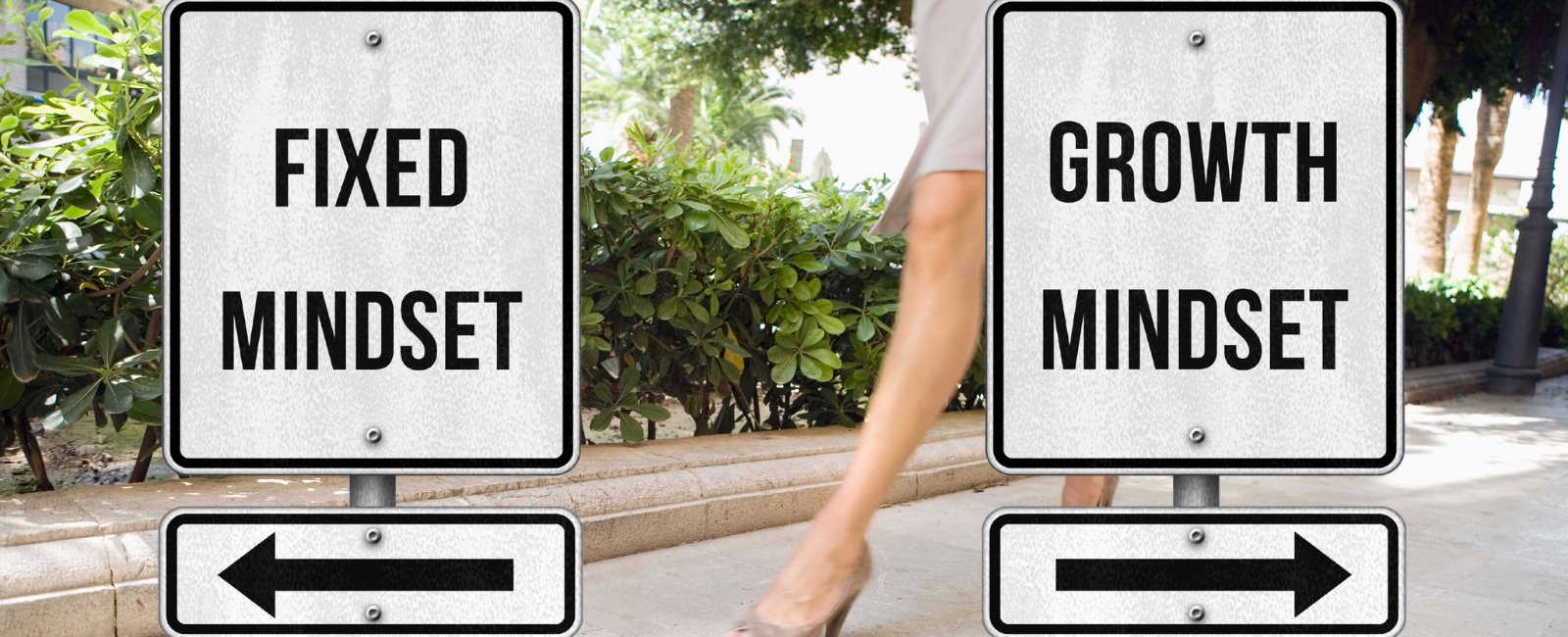
Fixed or Growth Mindset: What Are You Telling Yourself?
Professor Dr.Carol Dweck, from Stanford University, one of the most acclaimed researchers in the field of mindset has developed theories about the growth and fixed mindset, and her books are worth a read.
Even, if you, like myself, do not agree with all her theories. Her analysis offers the most comprehensive answer to individual success, attitudes, self-esteem, confidence, and actions.
The Fixed Mindset: “No, No, This Is Not My Thing at All”
People with a fixed mindset, believe their qualities, like basic abilities, intelligence, talent, are fixed abilities and talents someone is born with and can not be changed. The fixed mindset holds the belief that bestowed talents and gifted luck lead to success, and effort is not required. You’re either naturally good at something, or you never get it, period. From that perspective, struggling can feel horribly revealing: perhaps you never had the ability in the first place. Challenges become less appealing, and criticism can feel like a verdict rather than useful information.
Now, this doesn’t mean someone with a fixed mindset never works hard. She may work exceptionally hard to prove how capable she is. The uncomfortable question is whether she allows herself to tackle anything that might make her look temporarily incapable.
Does this sound familiar? It does to me!
You can run a business, organise an impossibly complicated life and have wonderfully assured opinions—then dismiss finance with “Oh, I’ve never understood any of that.” Perhaps you haven’t. But when did not understanding something become a lifelong arrangement?
For women accustomed to being praised for getting things right, getting something wrong can feel rather personal. Dweck’s research suggests that praise focused on intelligence can make children more concerned with proving their ability and less willing to risk mistakes. That is a learned response worth examining, sadly a flaw peculiar to intelligent women.
And being agreeable can become an expensive habit when it stops us asking what we need to know. “I don’t want to seem difficult” sounds terribly civilised—until we’re nodding through a decision we don’t understand.
The Growth Mindset: “Wonderful, who can teach Me”
A growth mindset leaves room for abilities to develop through learning, useful strategies, feedback and support. Difficulty becomes something to work through rather than proof that we should leave the subject alone.
This is quite a relief. Being super intelligent and simultaneously being a complete idiot at reading an investment statement is not a contardiction Both things can be true on the same perfectly ordinary Tuesday.

But there is some work involved. Merely declaring ourselves open to growth won’t explain inflation or make a confusing investment suddenly transparent. First we need understand everything about money mindsets in general. The second step would be to develop the right amount of curiosity to seek the information we need, opportunities to practise and people who can explain things clearly. When one approach leaves us thoroughly bewildered, we can try another. Mind you, it is not without any effort matters, but worth it.
Think You Know Everything About the Money Mindset?
We want to enjoy our money and preserve it, take worthwhile risks and make sensible decisions—then wonder why we feel pulled in every possible direction. Add a few familiar beliefs—wealthy people are selfish, making money leaves no time for culture, financially independent women are somehow intimidating—and things become even more muddled when our actual friends provide such lovely evidence to the contrary. This is where the paradox mindset meets the money mindset: how we handle those contradictions can leave us anxious, biased or doing absolutely nothing—or help us reconsider beliefs that no longer make much sense.
The Paradox Mindset: “Actually I want both”
Life has a rather irritating habit of asking us to satisfy two apparently contradictory demands. Doctors must provide excellent care while keeping costs down. Wealth owners may want to fund meaningful change while preserving the capital that makes their generosity possible. Both priorities matter. Neither politely disappears because the other is important.
It can feel exhausting. But perhaps the contradiction itself isn’t the problem. Perhaps we’re too quick to assume that one side has to lose.
An oxymoron? On the contrary, a long history of research shows that contemplating contradictions can break down assumptions, and shows wholly new ways of looking at things.
A paradox mindset means accepting—and sometimes even enjoying—the tension between competing demands. Rather than immediately choosing one over the other, we stay with the uncomfortable question: how could we accommodate both?
Research by INSEAD’s Ella Miron-Spektor and her colleagues suggests that this approach can help people turn the pressure of limited time and resources into better performance and more innovative solutions. Their study, published online in 2017 and in print in 2018, found that how people approached these tensions mattered.
Annoyingly, then, having everything neatly resolved may not always be best for our thinking.
The idea has an interesting history. Psychiatrist Albert Rothenberg interviewed 22 Nobel laureates and examined historical accounts of scientific discoveries. His research explored how holding apparently incompatible ideas together could contribute to creative breakthroughs. He called this the Janusian process. Fortunately, you don’t need to remember the name to appreciate the possibility.
You can want a generous life and a secure future. You can value expert advice and retain your independence. Those desires deserve some thoughtful work before you declare them incompatible. A powerful mind has more interesting things to do than rush into an unnecessary either-or.
The Money Mindset
Our attitudes towards money have a history, too. Some of it is personal. Some of it was established long before any of us arrived—and frankly, we weren’t consulted.
For generations, women’s financial authority was restricted by law and convention. Under the English common-law doctrine of coverture, marriage severely limited a woman’s independent legal and property rights. Arrangements such as separate estates offered some women protection, but independent control was hardly something every married woman could take for granted.
A woman could be perfectly capable of managing a household or helping run an estate while lacking authority over the assets supporting her life. Being capable and being allowed were two very different matters.
That history matters when we examine the familiar assumption that men handle the serious money decisions. For some women, leaving those decisions to a father, husband or adviser still feels reassuringly normal. It may even feel like being cared for. We can appreciate the care and still question the arrangement.
Today women have a purpose, they outlive their husbands, earn their own money, build their own wealth, they will be the benefactors of the biggest intergenerational wealth transfer ever, children will not be able to finance their mother’s or sisters lives anymore, Laws of succession and inheritance laws have changed or will change in the future.
Today, women earn, build businesses, own assets and inherit wealth. Our ambitions and responsibilities call for financial knowledge, economic understanding and the ability to make informed decisions. Yet an old belief—“someone else is better suited to this”—can remain surprisingly comfortable.
This is where our money mindset deserves a proper examination. Do we believe we can develop financial judgment? Are we willing to learn, reconsider an assumption and change an established arrangement? Or have we quietly accepted that our financial abilities have already reached their limit?
Financial confidence grows as we develop our understanding and learn to trust our informed judgment. Our financial voice gives that understanding a place in the decisions shaping our lives.
And once we stop insisting that one side must be wrong, once we stop our inner blamegame, we can begin shifting our mindset—starting with those familiar money beliefs that sound terribly convincing until we compare them with real life.
Speed Read
Shifting your Mindset is mandatory
The idea of a growth mindset is rather appealing. We can develop abilities, reconsider old assumptions and have more say in how our lives unfold. Particularly useful if some of our beliefs were handed to us at an age when we were hardly in a position to object.
A paradox mindset offers another useful possibility: learning to live with competing demands without immediately retreating or deciding that one must win. We can want freedom and security, enjoy our wealth and take its future seriously. The tension can be uncomfortable, but it can also encourage more inventive thinking.
Of course, none of us approaches every part of life in exactly the same way. You might happily learn a difficult language, yet insist that your financial abilities are beyond improvement. Or welcome professional challenges while declaring, “I’ve always been like this,” whenever someone questions a personal habit. We can be wonderfully open-minded in one area and surprisingly stubborn in another.
Nor do we need to abandon our responsibilities to develop. You can care deeply about your family, honour your commitments and still reconsider who makes the financial decisions. Wanting more involvement does not automatically mean wanting an argument. Although someone accustomed to having the final word may need a moment.
So, please relax we are not talking about a personality change, or that you change your peer group, divorce your husband, or abandon your children .
Shifting Your Mindset: Let’s Make This Personal
Facts first: Remember this, mindsets are enormously powerful, but they only exist in the mind.
There comes a point when a familiar belief becomes more restrictive than reassuring. We can see that something needs to change, yet the prospect feels horribly uncomfortable. What if we get it wrong? What if someone disapproves? What if we discover how much we don’t know?
Changing the mindset is not about changing one´s personality, or the creation of a different “you”, or breaking up with a partner, endangering a family, nullifying relationships, or annihilating the social background. Shifting your mindset is leaving the comfort zone, and taking control rather than being controlled.
Suddenly, doing nothing seems remarkably sensible.
Stop here, right now! Because, this is where a little honest examination helps. You don’t need to know everything about money mindsets, or any mindset for that matter, before you begin. Start with one belief that keeps getting between you and something you want to do.
1. Catch this finance related sentence that is on this continous loop
“I’m hopeless with money.” “I could never manage this myself.” “It’s too late for me to learn.” Write down your actual words, however embarrassing they look on paper. Notice when they appear: after criticism, beside a more knowledgeable friend, or whenever a decision becomes your responsibility. Naming the situation helps you recognise the pattern next time.
2. Find out what you´re really protecting
Visualize this creature living in your amygdala for years now, and wispering in your ear each time something he/she might not agree with. This creature could be an overly dilligent bookkeeper, a real demon, a giggly mouse, Have a proper conversation and find out whats really driving this.
What feels so threatening—your comfort, your reputation for being capable, your partner’s approval? Perhaps remaining uninvolved allows you to avoid responsibility for an outcome. An uncomfortable admission, certainly, but a useful one. You can work with an honest answer.
Once you have the answer do not go in to combat mode, rather distance yourself.
3. Give the demon a fair hearing—and ask for evidence
When you say, “I could never understand finance,” what are you basing that on? A miserable maths teacher? Your parents? Your parents´ constant money fights? One confusing conversation? Years of letting someone else handle it? Separate an experience from the sweeping conclusion you’ve drawn. “I haven’t learned this” describes your current knowledge far more accurately than “I’m incapable of learning it.”
4. Replace the old belief with something you can actually believe
There is no need to announce that you are a brilliant investor by breakfast. Try a more credible position: “I can develop the understanding I need to participate in these decisions.” Then choose an action that supports it—a regular learning session, a subject to study or a manageable responsibility to take on. Give your new attitude something practical to do.
5. Make room for both sides of the dilemma
Write down the two things you want to protect. “I want to enjoy my life” and “I want lasting financial security,” for example. Give each some serious attention. What would respecting both require? A paradox mindset invites us to keep working with that tension instead of using it as a reason to postpone everything indefinitely.
6. Expect the old reaction to return. Have a response ready.
This belief which so deeply embedded in your subconcious, is there for a good reason. Wayback when you where a child it had a protective function.
An awkward mistake or an impatient comment may bring back that familiar urge to withdraw. Prepare a simple plan: “When I feel embarrassed about not understanding, I’ll pause, identify what I’m missing and return to it.” If your approach isn’t helping you learn, change the approach. Trying a different strategy and seeking useful support are part of development.
Some days this will feel encouraging. Others, decidedly less so. Keep a small record of what you understand now, what you’ve attempted and what needs more work. Progress can be easy to overlook when we’re busy noticing everything we haven’t mastere
Shifting the mindset is neither without effort nor is it possible without a purpose, will, goal-setting, courage, and some honest self-searching. There will be setbacks but not doomsday, but a chance to learn and grow.
You can begin with your existing life, your imperfect knowledge and one overdue decision to become more involved. My Terms. My Style. My Mission. Choose one belief you’re ready to question—and give yourself the chance to discover what becomes possible without it.
Remember, the mindset is an important tool, it affects our daily self-dialogue and reinforces our most intimate beliefs, attitudes, and feelings about ourselves. We have to choose carefully which one we give permission to dominate us.
A final thought, before I leave:
Perhaps financial confidence isn’t really about knowing all the answers. It’s about being willing to ask better questions, including of ourselves.